In the home stretch before hibernation, the brown bears of Katmai National Park and Preserve must keep their eyes on the prize to complete their ample figures. In order to survive the long Alaska Peninsula winter, they need to pack on serious weight by way of salmon, grasses and berries. Fortunately, the 4 million-acre park is rich with all three.
A selection of this work was supported and published by The Washington Post. Read the full story here.
Katmai National Park is home to one of the largest populations of protected brown bears in the world. They're also the largest brown bears, with adult males weighing over 1,000 pounds by fall. In their bulking season, they gain three to six pounds of fat a day by eating 80 to 90 pounds of food in that same time frame. When the getting's good, bears practice "energy economics." They can be spotted savoring morsels like salmon skin, brains and eggs - the fattiest parts of a sockeye's 4,500 total calories - then discarding the rest. Once their figurative pantries start to dwindle, they'll get less picky and start hoovering whole fish.
Park rangers assign bears numbers for official identification purposes, and fans who watch bear cams on Explore.org give them nicknames. As a result, people online and in person call them by a hybrid of both. For example, there's 128 "Grazer."
The most popular place in the park to view its bears is Brooks Camp, located at the mouth of the Brooks River. It's not easy to get there. Visitors must take a 20-minute float plane or 40-minute water taxi, both of which cost more than $400 round-trip. But people make the trip. In 2022, more than 17,000 reached Brooks Camp.
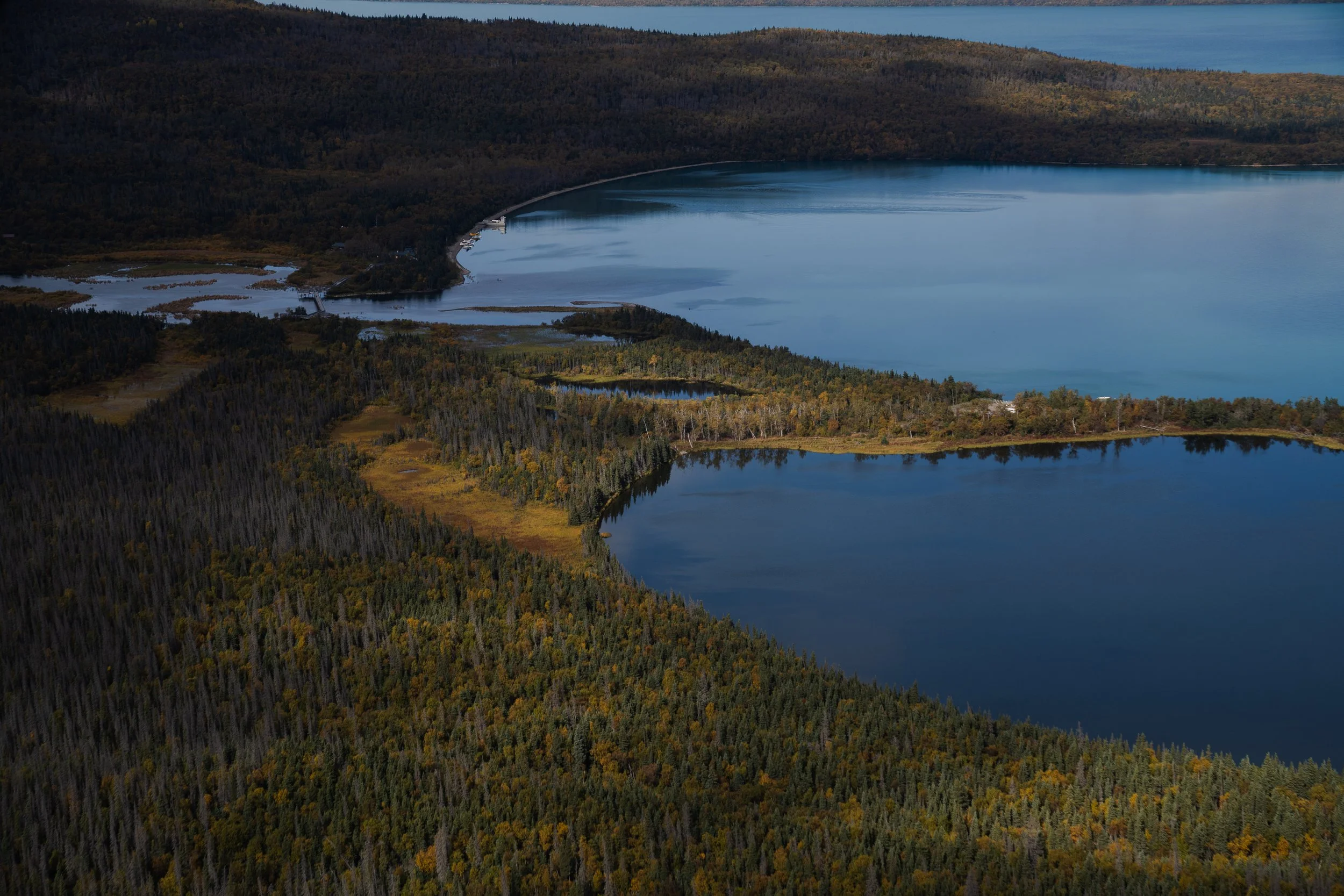
Brooks Camp, seen from the air.
The Brooks bears have also garnered international attention thanks to Fat Bear Week, an online competition for fans to vote on which bears bulked up best for hibernation. Last year's tournament drew more than a million votes.
Fans of Fat Bear Week and the Explore. org live cameras love getting to know the bears' personalities, family lines and fishing styles. This year, the audience was captivated by the heart-wrenching tale of new mom 901, who came to Brooks Falls with three adorable cubs but lost one in September.
Another family unit that captivated audiences was between 910 and her sister 909. The sisters and first time mothers surprised National Park Service staff and online viewers alike when they integrated their families, spending extended time fishing and playing together over the summer. Shortly after the four returned to Brooks Falls in the spring of 2023, 909 Jr. was emancipated from her mother, a natural process that usually begins a subadult bear’s journey towards independence. However, 909 Jr. was quickly adopted by her aunt 910 and cousin 910 Jr., and the trio formed a new family group. 909 Jr. and 910 Jr. were slated against each other in the 2023 Fat Bear Week Jr. competition.
Fat Bear Week is made possible by Katmai's rangers like Felicia Jimenez who spend months working on competition programming. The toughest part of the job might be getting the best before and after photos of the participating bears to show fans their skinny status in the spring and epic weight gain in the fall.
There's no data on the live cameras or Fat Bear Week's impact on tourism to the park. But media ranger Naomi Boak does believe they are responsible for at least some visitation. The real burst came in the post-lockdown, revenge travel era. "People were desperate to get out," Boak said.
While it's easy to get caught up in Katmai's beauty, remember that it's not a zoo. "One thing that I always try to emphasize to people is to make sure they're considering the bears' needs when they visit," said former Katmai ranger Mike Fitz, now a naturalist with Explore.org. "For the bears, that's a place they need to survive. They need access to the salmon in the river."
Brooks Camp has a campground that can accommodate 60 visitors. Reservations for the calendar open in January and fill up within minutes of becoming available. The one lodge in the area is even more competitive, with just 16 rooms. As the park's popularity increases, Fitz said the park will need to work on getting a hold on visitation.
"Brooks can't sustain an unlimited number of people," he said. "It's already very stressful for the rangers, and the facilities can only hold so many people."